2021 Ace
Noch versiegelt
Klappcover
“Martin and Bob pinpoint the inspiration of the late ‘60s/early ‘70s “new country” to Bobbie Gentry’s Ode to Billie Joe… Its artists worked and lived not only in Nashville on the outskirts of the existing country music scene but also in LA, in many cases cutting their teeth as DJs and songwriters and writing for Elvis or Glen Campbell… Some artists later became big stars themselves – Dolly Parton, Kenny Rogers and Bobbie Gentry herself who even had a 1968 BBC TV series of her own.”
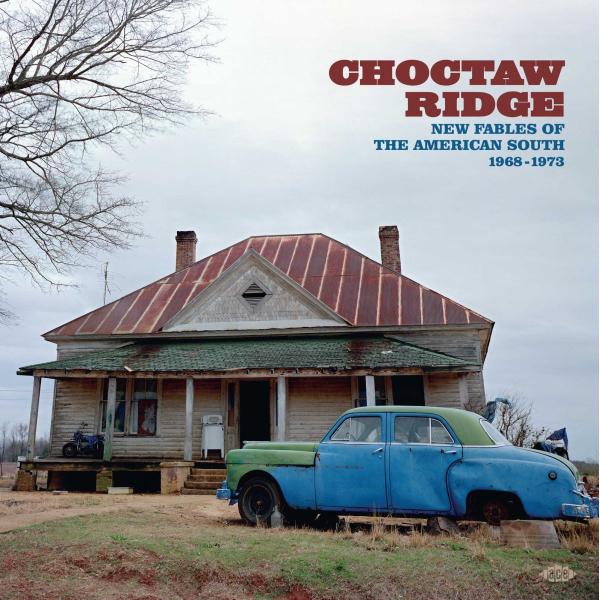
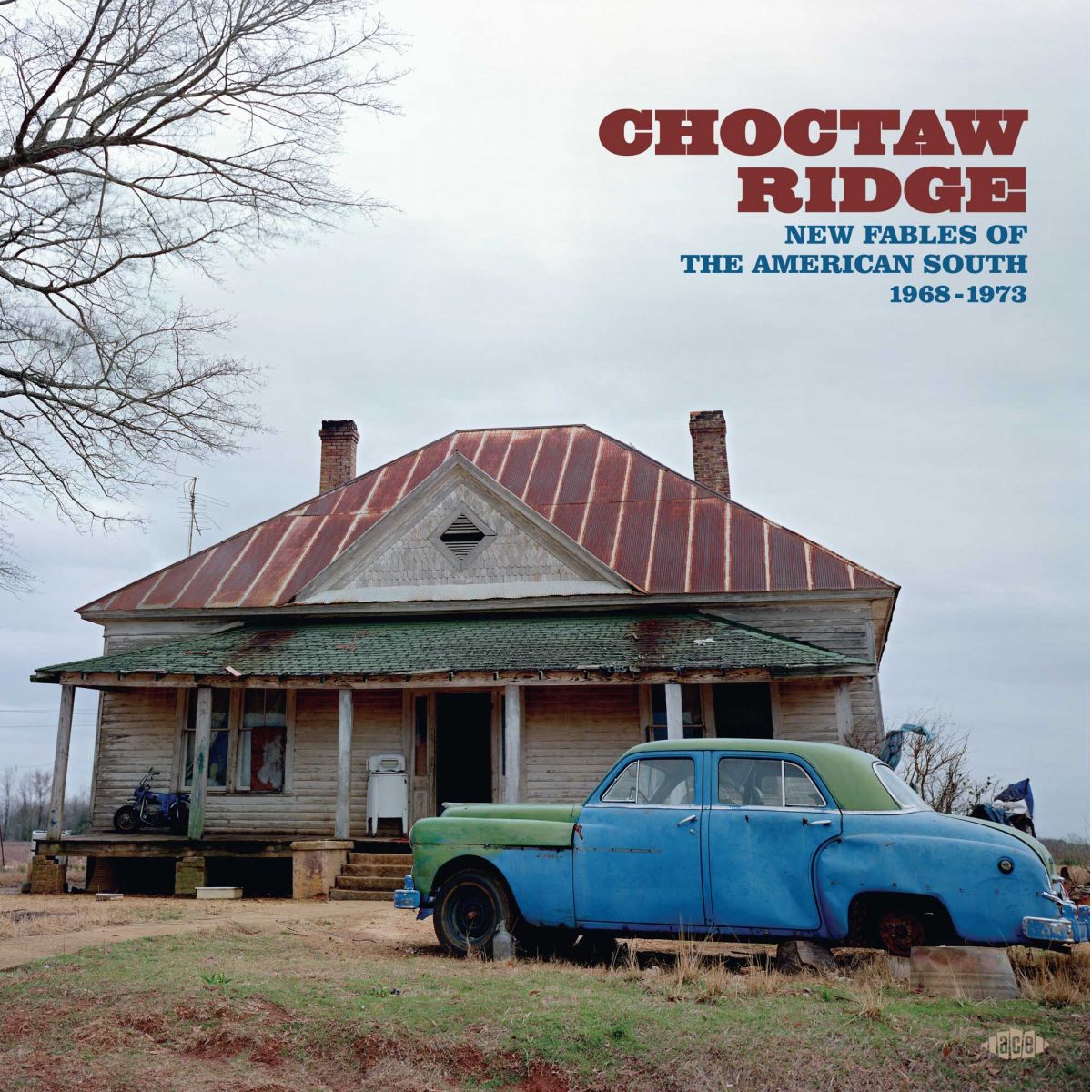
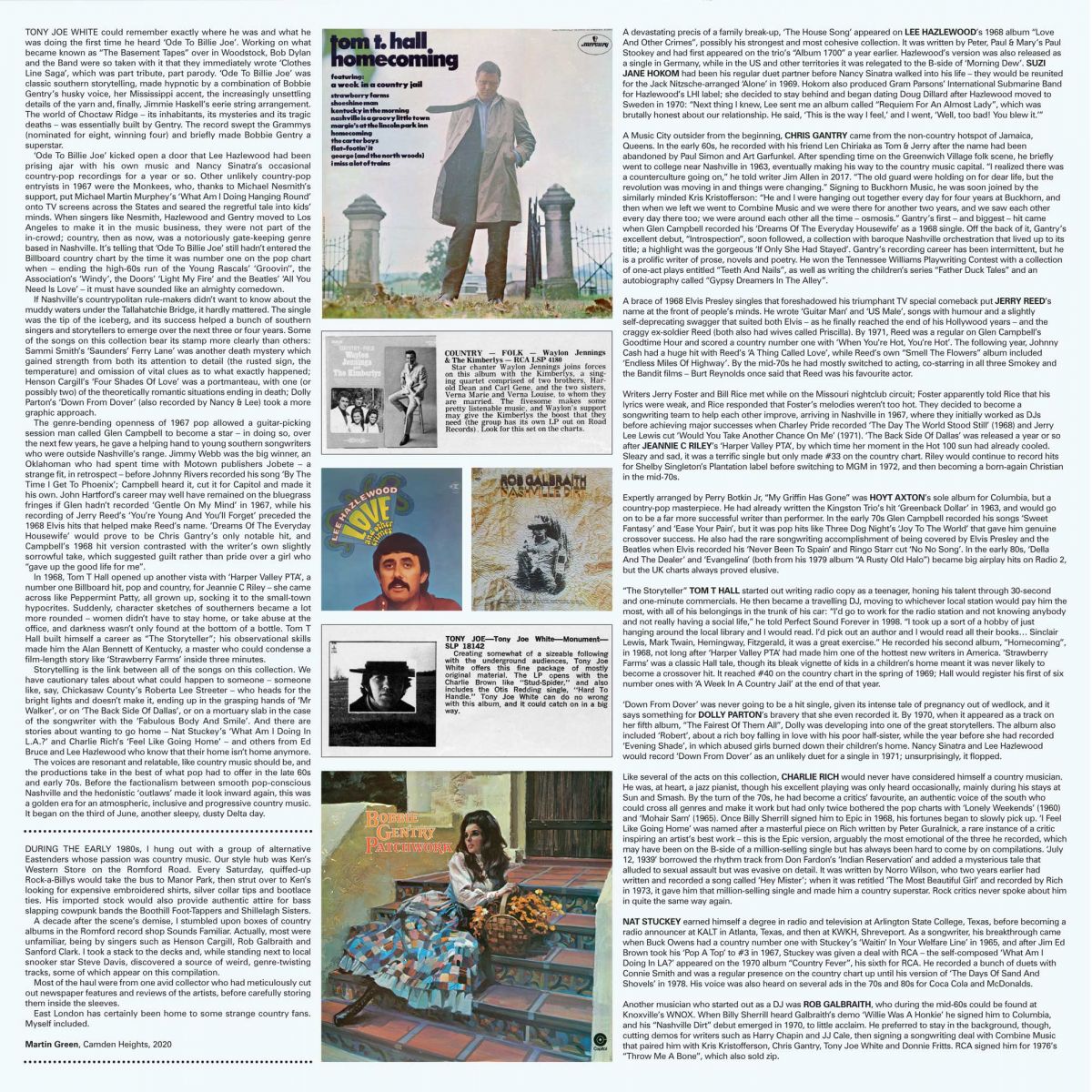
Choctaw Ridge is the new compilation released on Ace Records and compiled by writer and musician Bob Stanley and DJ and writer Martin Green. As with most of Bob’s excellent previous Ace compilations Choctaw Ridge captures a moment in time, a kind of general atmosphere and feel of when things were on the cusp of changing. In this case it is the music created by the artists, songwriters and musicians of the “new country” era of the late ‘60s and early ‘70s:songs that tell stories (often depressing one’s in the country tradition) but that sound influenced by the ambitious vocal and brass arrangements of the time. It’s not surprising that two Lee Hazelwood tracks appear on the album including the opener The House Song – a song about divorce. As with Hazelwood’s work, this “new” country seemed to moving in a new direction whilst still narrating stories about trapped lives, domestic violence and loneliness.
Both Martin and Bob pinpoint the origins and influence on this style directly to the release of Bobbie Gentry’s Ode to Billie Joe – the title of the album, of course, comes from the lyrics of the song.
Sometimes directly inspired by Ode to Billy Joe’s style these various artists worked and lived not only in Nashville on the outskirts of the existing country music scene but also in Los Angeles. In many cases cutting their teeth as DJs and songwriters and sometimes if lucky writing for Memphis period Elvis or Glen Campbell, these artists started to make records in their own right. Jerry Reed for example, whose song Endless Miles Of Highway appears on here, wrote two of the best late ‘60s period Elvis songs Guitar Man and US Male – as well as co-starring in Smokey and the Bandit! John Hartford (whose sleazy Mr Jackson Has Got Nothing To Do appears here) wrote Gentle On My Mind for Glen Campbell. Some artists later became big stars themselves – Dolly Parton, Kenny Rogers and Bobbie Gentry herself who even had a 1968 BBC TV series of her own.
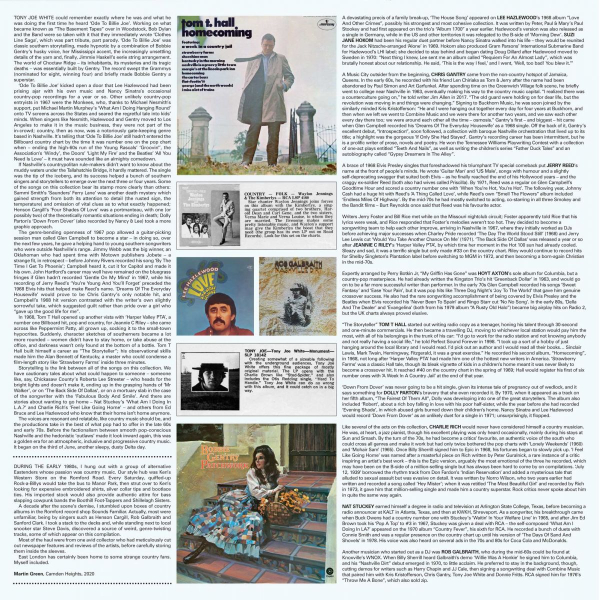
In the excellent liner notes, DJ and writer Martin Green details how he stumbled across a box of new country records in Romford market in the early eighties and discovered some of the artists who appear on this compilation – later playing them at a DJ night whilst standing next to snooker star and co DJ Steve Davies! Bob Stanley’s track by track descriptions are also as always informative and entertaining – great to learn for example that Jim Ford as well as probably falsely claiming to have written Ode to Billie Joe also appears on the cover of Sly and the Family Stone’s There’s A Riot Going On and also had his song 36 Inches High covered by Nick Lowe on Jesus of Cool!
There are many excellent tracks on the album. Tom T Hall’s track Strawberry Farms about life at an orphanage is haunting and sad. Chris Gantry’s If Only She Had Stayed is similarly haunting though does seem to be more than slightly influenced by Rogers & Hart’s My Funny Valentine and the Beatles’ Yesterday. Billy J Spears’ Mr Walker, It’s All Over is an honest description of office harassment and Jeannie C Riley’s The Back Side of Dallas talks about someone finding themselves in a dead-end situation.
Kenny Rogers’ hit Ruby, Don’t take your love to town (which I didn’t know was a cover version of a song about the Korean War but do now thanks to Martin Green’s excellent liner notes) was great to hear again as was Joanne by ex-Monkee Michael Nesmith.
Lee Hazelwood’s Alone, a duet with his pre-Nancy partner Suzi Jane Hokom, sounds great with its Jack Nitzsche arrangements . Sammi Smith’s Saunders’ Ferry Lane is another beautiful and haunting track and Charlie Rich’s I Feel Like Going Home is an epic closing track to another great compilation from Ace. - We Are Cult website
|
1
|
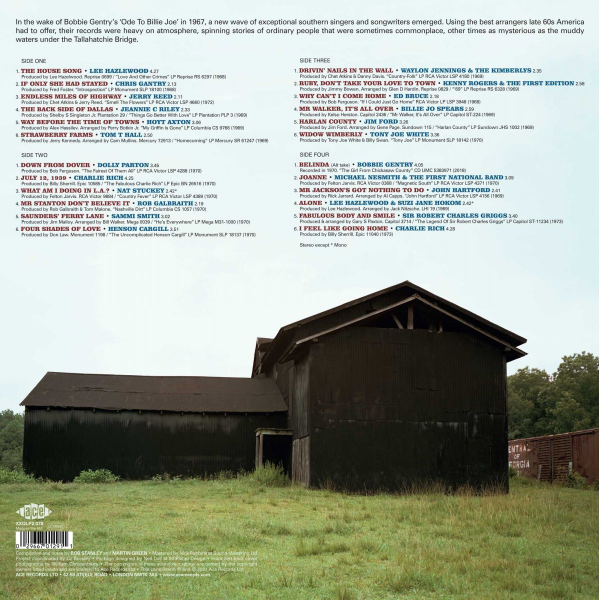
The House Song - Hazlewood, Lee
|
|
2
|
If Only She Had Stayed - Gantry, Chris
|
|
3
|
Endless Miles Of Highway - Reed, Jerry
|
|
4
|
The Back Side Of Dallas - Riley, Jeannie C.
|
|
5
|
Way Before The Time Of Towns - Axton, Hoyt
|
|
6
|
Strawberry Farms - Hall, Tom T.
|
|
7
|
Down From Dover - Parton, Dolly
|
|
8
|
July 12, 1939 - Rich, Charlie
|
|
9
|
What Am I Doing In L.A.? - Stuckey, Nat
|
|
10
|
Mr Stanton Don' Believe It - Galbraith, Rob
|
|
11
|
Saunders Ferry Lane - Smith, Sammi
|
|
12
|
Four Shades Of Love - Gargill, Henson
|
|
13
|
Drivin' Nails In The Wall - Jennings, Waylon & The Kimberlys
|
|
14
|
Ruby, Don't Take Your Love To Town - Rogers, Kenny & The First Edition
|
|
15
|
Why Can't I Come Home - Bruce, Ed
|
|
16
|
Mr Walker, It's All Over - Spears, Billie Jo
|
|
17
|
Harlan County - Ford, Jim
|
|
18
|
Widow Wimberly - White, Tony Joe
|
|
19
|
Belinda (Alt Take) - Gentry, Bobbie
|
|
20
|
Joanne - Nesmith, Michael & The First National Band
|
|
21
|
Mr Jackson's Got Nothing To Do - Hartford, John
|
|
22
|
Alone - Hazlewood, Lee / Hokom, Suzi Jane
|
|
23
|
Fabolous Body And Smile - Griggs, Sir Robert Charles
|
|
24
|
I Feel Like Going Home - Rich, Charlie
|
Ace Webseite: Choctaw Ridge” explores a new country sound, one that emerged at the end of the 60s in the wake of Bobbie Gentry’s ‘Ode To Billie Joe’, a shock number one hit in 1967. When singers like Gentry, Jimmy Webb, Michael Nesmith and Lee Hazlewood moved from the south to Los Angeles to make it in the music business, they were not part of the Nashville in-crowd and they forged a new direction.
'Ode To Billie Joe’ was the tip of the iceberg, and its success helped a bunch of singers and storytellers to emerge over the next three or four years. Some of the tracks on this collection bear that song’s stamp more clearly than others: Sammi Smith’s moody ‘Saunders’ Ferry Lane’ had a similar mystery lyric, and Henson Cargill’s ‘Four Shades Of Love’ is a portmanteau, with one (or possibly two) of the theoretically romantic situations ending in death.
Suddenly, character sketches of southerners became a lot more rounded – women didn’t have to stay home, or take abuse at the office, and darkness wasn’t only found at the bottom of a bottle. Storytelling is the link between all of the songs on this collection. We have cautionary tales about what could happen to someone who heads for the bright lights and doesn’t make it, ending up in the grasping hands of ‘Mr Walker’ (Billie Joe Spears), or on the ‘Back Side Of Dallas’ (Jeannie C Reilly), or on a mortuary slab in the case of the songwriter with the ‘Fabulous Body And Smile’ (Robert Charles Griggs). And there are stories about wanting to go home – Nat Stuckey’s ‘What Am I Doing In LA?’ and Charlie Rich’s ‘Feel Like Going Home’ – and others from Ed Bruce and Lee Hazlewood, who know that their home isn’t home anymore.
The tracklist and fulsome sleeve notes have been put together by Bob Stanley (Saint Etienne) and Martin Green (Smashing, The Sound Gallery), who have been collecting these records for decades.
The voices are resonant and relatable, and the productions take in the best of what pop had to offer in the late 60s and early 70s. Before the factionalism between smooth pop-conscious Nashville and the hedonistic ‘outlaws’ made it look inward again, this was a golden era for an atmospheric, inclusive and progressive country music. It began on the third of June, another sleepy, dusty Delta day.