1986 Demon Records
sehr guter Zustand. Neues Jewel Case
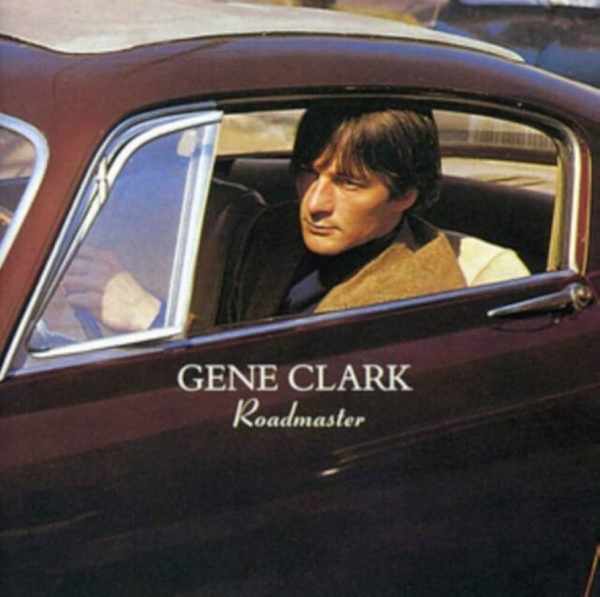
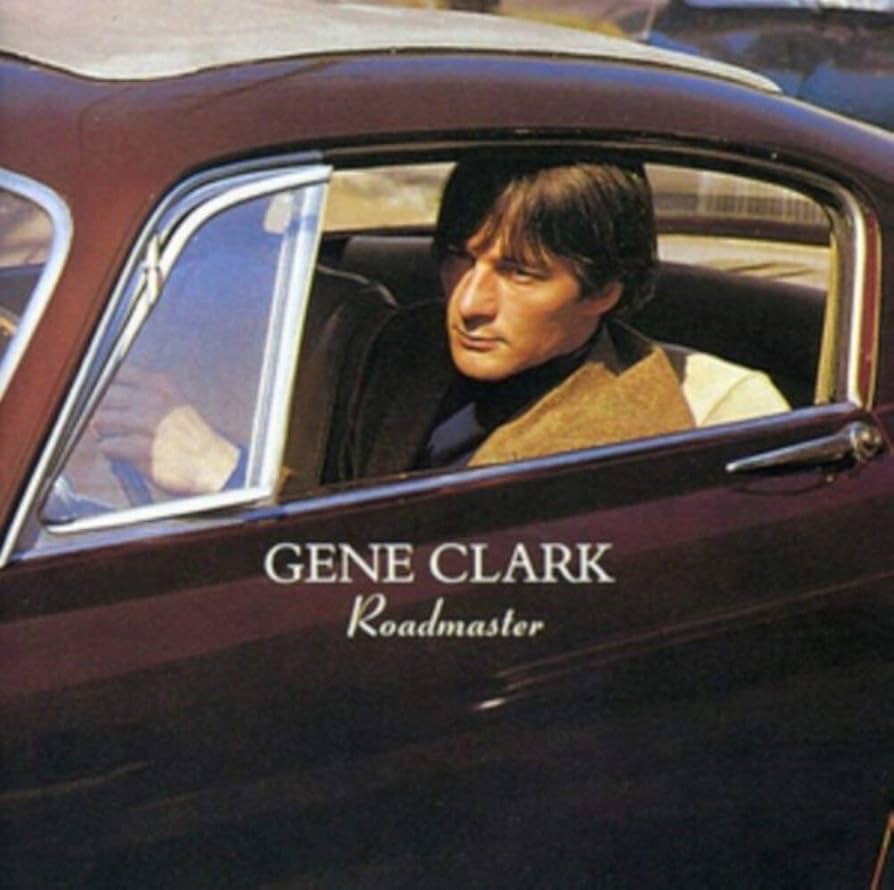
Take a look at the sleeve of Clark’s “lost” 1972 solo album Roadmaster and you might feel envious too. There’s Clark standing in front of his Ferrari, the flop-haired dandy in matching maroon jacket and grey polo neck. In fact, by that juncture, there wasn’t a whole lot to envy in Gene Clark’s life. In the years beteeen his departure from The Byrds and his death in 1991, none of his records sold in significant quantities. Some of them barely even surfaced. In the decade Clark recorded it, Holland was the only country in Roadmaster even came out.
Perhaps the even greater impediment to Roadmaster’s standing as a classic album is the fact that Clark never finished it. Asked by A&M to honour his contract with one more album, the singer assembled a glittering array of LA country rockers, such as Spooner Oldham, Clarence White (The Byrds), Sneaky Pete (Flying Burrito Brothers). This is the supergroup of sorts you can hear on the main part of Roadmaster. No matter that Clark was no longer selling records; the depth of his songwriting chops is mirrored by the sensitivity his band bring to these songs. On In A Misty Morning he sounds every inch the Missouri ingenue struggling to keep a lid on his loneliness as the city goes about its business. Over the course of his life, Clark held down relationships with about as much success as Su Pollard might be expected to hold down a polar bear. Although initially a Flat and Scruggs song, Rough And Rocky somehow feels more like a Clark song than almost anything else on Roadmaster. “Don’t my baby look the sweetest when she’s in my arms asleep,” he sings. It’ll bring a tear to your eye, and yet our protagonist is getting ready to pack his bags, never to return. Clark freights similar sentiments and a scattering of unsavoury double-entendres into the album’s title track, a honky-tonk love-em-and-leave-em address which is by some distance Roadmaster’s most skippable moment.
Byrds associations rear their heads in all sorts of ways on Roadmaster. Clark reclaims 1965’s She Don’t Care About Time and drapes it in exquisite country-baroque langour. Then there’s Full Circle Song: a year after Clark recorded it for Roadmaster, the reformed Byrds tackled it for their ill-fated Asylum album. But this is the version that truly lacerates the heartstrings, a punch-drunk paean to the misfortunes that make us and the misfortunes we make. Elsewhere, if Roadmaster’s first two tracks also sound possessed of a certain jingle-jangle mourning, that’s no accident. In 1970, Jim Dickson recorded a pair of stand-alone Clark singles which reunited the original lineup of The Byrds, albeit not at the same time (Crosby and McGuinn refused to enter the studio at the same time as each other). Boasting beautiful flute embellishments, She’s The Kind Of Girl is classic Clark fare: its protagonist bewitched by the unknowability of his muse, while. Better still One In A Hundred, a hymnal synergy of crashing fills from Michael Clark and a crunchy McGuinn fretwork. Also dating from around the same time is an aching homesickness lament Here Tonight recorded with The Flying Burrito Brothers.
An entire Gene Clark album (1971’s White Light) separates the trio of 1970 songs from the rest of Roadmaster. Aged 18, when I bought the maiden British pressing of the album, I had absolutely no idea Roadmaster wasn’t a “proper” album. Three decades later, without the benefit of its backstory, I don’t suppose anyone else would be able to spot the joins either. Clark connoisseurs will always hold up the chemical grandeur of 1974’s No Other as the apogee of his output. Would it be too perverse to make a case for its predecessor as its equal? Well, let’s make a list of all the qualities most synonymous with Clark’s genius. Melody. Check. Melancholy. Check. Poetic yearning. Check. Copious use of E minor. Check. Well, that seems to settle it.